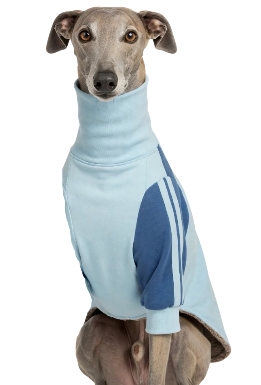
Finding the best clothes for 3 legged dogs can be challenging. Standard dog jumpers and coats are usually designed for four-legged dogs, leaving excess fabric around a missing limb. The right clothing should fit securely, allow the remaining legs to move freely, and provide suitable warmth and coverage without restricting movement.
At Tripawd Clothing UK, I design and make specialist clothing for three-legged dogs, including custom recovery shirts, fleece jumpers, knitted sweaters and coats. With over 60 years of knitting, sewing and garment-making experience, I understand how fabric choice, construction and careful fitting can make a difference to a dog's comfort.
Every dog is different, and clothing needs to take account of which leg is missing, the dog's body shape, their mobility and the purpose of the garment.
Key Takeaways
-
Custom-fitted clothing: Garments designed for three-legged dogs can help reduce excess fabric around the missing limb and improve fit.
-
Recovery shirts: Soft cotton jersey shirts may be suitable for covering parts of the body after surgery, subject to your vet's advice and the needs of the surgical site.
-
Warmth and comfort: Fleece jumpers and knitted sweaters offer options for cooler weather and indoor lounging.
-
Waterproof coats: Specialist coats can provide an additional layer against wind, rain and cold weather.
-
Accurate measurements: Neck, chest and back measurements help achieve a comfortable fit, while identifying the missing limb helps determine the garment's construction.
What Are the Best Clothes for 3 Legged Dogs?
The best clothing for a three-legged dog depends on whether you need a garment for post-operative recovery, everyday warmth, outdoor walks or wet weather.
A well-designed garment should accommodate the dog's remaining limbs, fit comfortably around the chest and belly, and stay in position without bunching or dragging.
At Tripawd Clothing UK, I make clothing specifically for three-legged dogs rather than simply adapting the idea of an ordinary four-legged dog's outfit. My designs take the missing limb into account, including the position of the opening and the way the garment sits on the dog's body.
Here are the main options to consider.
Recovery Shirts
Soft cotton jersey recovery shirts can provide body coverage after surgery when your vet confirms that clothing is appropriate. The fabric should be comfortable, and the garment must fit without rubbing, putting pressure on the surgical site or restricting movement.
Recovery shirts need particular care when fitting around a missing limb. The design must account for the location of the incision and allow the dog to move comfortably.
Recovery clothing is not a substitute for veterinary advice or a protective cone when one is needed. Check the surgical site regularly and follow your vet's instructions.
Fleece Jumpers
Fleece jumpers are a practical option for cooler days, walks and relaxing at home. They offer warmth without the weight of a heavy coat.
For three-legged dogs, the position of the openings and the shape of the belly hem are important. Excess fabric should not hang around the remaining legs, and the garment should not twist or restrict the dog's natural movement.
Knitted Dog Sweaters
Knitted sweaters offer another way to keep a dog warm, with plenty of scope for individual colours, stripes and designs.
My knitting and sewing experience allows me to work with different yarns and garment constructions, creating clothing with a considered fit rather than relying on a generic pattern.
The yarn, stitch pattern and tension all affect the finished garment. A sweater should be comfortable against the dog's coat and skin, with enough room for normal movement.
Custom Dog Coats
For colder or wetter weather, a custom coat can provide an additional protective layer. Depending on the design and materials, a coat may feature a water-resistant outer fabric, a warm lining or fleece construction.
The fit is particularly important for three-legged dogs. The coat should stay in position without catching around the remaining legs or interfering with walking, toileting or other everyday activities.
How Does a Front or Rear Leg Amputation Affect Clothing Fit?
The position of the missing limb is one of the most important details when choosing clothing for a three-legged dog.
A front-leg amputation changes the fit required around the chest and shoulder. A rear-leg amputation creates different considerations around the belly, waist and back of the garment.
Clothing for Dogs Missing a Front Leg
When a dog is missing a front leg, the garment needs to accommodate the remaining front leg and sit comfortably around the chest and shoulder.
An unsuitable opening can allow excess fabric to shift, rub or interfere with movement. The garment may also rotate around the body if it does not fit properly.
A carefully shaped chest panel and a suitably positioned opening can help the clothing sit more securely. The design must also take account of any surgical site, particularly during recovery.
Clothing for Dogs Missing a Rear Leg
For a dog missing a rear leg, the shape and length of the garment around the belly and hindquarters need particular attention.
Excess fabric can interfere with the remaining rear leg or become caught during movement. A carefully shaped belly hem can help keep the garment in place while allowing room for walking and toileting.
The ideal design depends on the individual dog's proportions and the position of the missing limb.
Why Does the Missing Side Matter?
Knowing whether a dog is missing the front left, front right, rear left or rear right leg helps determine how the garment should be constructed.
This is one reason specialist clothing can be useful. Rather than assuming that every three-legged dog needs the same design, the garment can be planned around the dog's individual shape and needs.
Are Recovery Shirts Better Than Traditional Dog Cones?
Recovery shirts and protective cones serve different purposes.
A recovery shirt may cover part of the body and help prevent direct contact with a surgical site, depending on its design. A protective cone is intended to prevent a dog from licking or chewing an area that needs to heal.
Neither option is right for every situation.
Some dogs find cones awkward to navigate, while others need one to prevent access to a wound. A shirt may be unsuitable if it rubs the incision, becomes damp or dirty, or prevents the wound from being checked.
Before using a recovery shirt after surgery, ask your vet whether it is suitable for your dog's particular operation. Follow instructions about wound inspection, cleaning and protective equipment.
Choosing a Suitable Recovery Shirt
When selecting a post-operative shirt, consider:
-
Fabric: Soft, breathable material that is appropriate for the surgical site.
-
Seams: Construction that minimises rubbing against sensitive areas.
-
Fit: Enough room for comfortable movement without loose fabric catching around the legs.
-
Coverage: The garment should cover the intended area without interfering with the incision or medical care.
-
Washing: The ability to keep the garment clean according to the fabric's care instructions.
A well-fitting recovery shirt should complement your vet's recovery plan, not replace it.
Clothing for Dogs With a Paralysed or Non-Functioning Leg
Not every dog with a mobility difference has had a limb amputated. Some dogs still have all four legs, but one leg is paralysed or cannot be used normally. These dogs may need clothing designed differently from standard dog jumpers and from clothing made for three-legged dogs.
A leg that cannot move normally may rest against the body, extend at an unusual angle or drag during movement. This can make ordinary clothing uncomfortable or cause fabric to catch around the affected limb.
When designing clothing for a dog with a non-functioning leg, the position of the limb and the dog's individual mobility need to be considered carefully. The garment should accommodate the leg without squeezing it, pulling it into an unnatural position or restricting the dog's other limbs.
Fabric choice, seam placement and the shape of the garment are particularly important. The clothing must also allow the owner to check the affected limb and the skin underneath it.
At Tripawd Clothing UK, I recognise that dogs with different mobility needs cannot all be dressed in the same way. Custom clothing offers the opportunity to consider each dog's shape and circumstances rather than relying on a standard four-legged pattern.
If a dog drags a paralysed leg, has reduced sensation or develops skin irritation, ask your vet for advice about suitable protection and clothing.
Pyjamas for Dogs With a Rear-Leg Amputation
Dogs with a rear-leg amputation may also benefit from purpose-designed pyjamas for relaxing at home and keeping warm while resting.
Ordinary dog pyjamas are generally made for four-legged dogs. Depending on their design, the unused leg opening can leave excess fabric around the hindquarters, while the overall shape may not sit properly on a dog with a different body shape.
Pyjamas designed for a dog with a rear-leg amputation need to accommodate the remaining hind leg and allow comfortable movement. The cut around the belly and rear of the garment should also make it practical for everyday toileting.
Soft, comfortable fabric is important for sleepwear. The pyjamas should fit securely without becoming tight, bunching up or restricting the dog's ability to change position.
As with any dog clothing, the fit should be checked regularly. Pyjamas should be removed if they become twisted, damp, dirty or uncomfortable, and dogs should be supervised when wearing clothing that could catch or become tangled.
For dogs recovering from surgery, sleepwear must also be suitable for the healing stage. Follow your vet's advice before covering a surgical site or using clothing during recovery.
At Tripawd Clothing UK, specialist dog clothing is about recognising that a three-legged dog may need a different design from a dog with four legs, just as a dog with a non-functioning limb may need a different approach again.
The aim is simple: clothing that takes the individual dog into account, rather than expecting every dog to fit the same pattern.
How to Measure a Three-Legged Dog for Clothing
Accurate measurements are essential when ordering custom dog clothing. A garment that is too tight can restrict movement, while one that is too loose may shift or bunch.
Use a soft tape measure and take the measurements while your dog is standing comfortably, if they can do so safely. For dogs who have difficulty standing, ask your vet how best to measure them without causing discomfort.
1. Neck Circumference
Measure around the base of the neck where the garment's neckline will sit. Keep the tape comfortably against the coat without pulling it tight.
2. Chest Girth
Measure around the widest part of the ribcage, usually just behind the front legs. This is an important measurement for choosing a comfortable fit.
3. Back Length & Leg Lengths
Measure along the spine from the base of the neck to the point where you want the garment to end. The correct endpoint depends on the style of clothing. Those items with long sleeves need measuring, so we know they will be sufficiently long but not too long for the dog to trip over.
4. Identify the Missing Limb
Specify whether the missing limb is the front left, front right, rear left or rear right.
This information helps determine the placement and construction of the garment's openings.
5. Share Any Special Requirements
If your dog has unusual proportions, a prominent chest, a long back, or a surgical site that affects clothing placement, include these details when discussing a custom order.
Measure carefully and follow the individual maker's instructions, as sizing methods can vary between garment styles.
How Do You Choose the Right Fabric for a Three-Legged Dog?
The best fabric depends on the garment's purpose, the weather and the dog's individual needs.
-
Cotton jersey: A soft, flexible option for recovery shirts and lightweight clothing, where suitable for the intended use.
-
Polar fleece: A lightweight, warm fabric for everyday jumpers and cooler weather.
-
Knitted yarn: Suitable for sweaters designed for comfortable indoor wear and outings in appropriate conditions.
-
Water-resistant outer fabrics: Useful for coats intended to provide additional protection from rain and wind.
Fabric choice is only part of the picture. The garment's construction, seam placement, fit and ease of movement are equally important.
For post-operative clothing, always follow your vet's guidance about materials, wound coverage and garment use.
Frequently Asked Questions About Clothes for 3 Legged Dogs
Can three-legged dogs wear ordinary dog jumpers?
Some can, provided the garment fits properly. However, ordinary jumpers are usually designed for four legs, so excess fabric around an unused opening may sag, twist or catch around a remaining leg. Specialist clothing can address these fitting challenges.
What should a three-legged dog wear after amputation surgery?
That depends on the operation, the location of the incision and your vet's instructions. A suitable recovery shirt may be an option, but clothing should not rub the wound, trap moisture or prevent inspection. Ask your vet before using a garment over a surgical site.
Is cotton jersey suitable for dog recovery shirts?
Cotton jersey is soft and flexible and may be suitable for certain recovery garments. However, suitability depends on the wound, fit, cleanliness and veterinary instructions. No fabric should automatically be considered appropriate for every surgical incision.
How many recovery shirts should I buy?
Two shirts can be useful if your vet recommends clothing and the garments can be changed and washed as needed. Having a clean spare available makes rotation easier, but always follow your vet's instructions about when the shirt should be worn and removed.
Should three-legged dogs wear clothes indoors?
Some dogs appreciate a lightweight jumper in a cool home, while others are comfortable without clothing. Consider your dog's coat, room temperature, and individual preferences. Clothing should not cause overheating or restrict movement, and your dog should be able to move away from it if uncomfortable.
Can I order custom clothing for my three-legged dog?
Custom clothing can be helpful when standard sizes do not accommodate your dog's shape or missing limb. At Tripawd Clothing UK, I make specialist garments for three-legged dogs, with options including recovery shirts, fleece jumpers, PJs, knitted sweaters and coats. The available design and fit depend on your dog's measurements and the garment required.
Why Pay for Specially Made Clothes for a Three-Legged Dog?
When your dog has three legs, why pay for specially made clothing when you can buy an ordinary dog jumper or coat from a pet shop?
The answer is fit, comfort and thoughtful design.
Most standard dog clothing is designed around four legs. When a dog has had an amputation, an unused leg opening can leave excess fabric that hangs loose, shifts around the body or catches against a remaining limb. Depending on the garment and the dog's movement, this can make ordinary clothing awkward to wear.
Specialist clothing is designed with the dog's different body shape in mind. The opening around the missing limb can be constructed to reduce loose fabric, while the chest, belly and remaining leg openings can be shaped to provide a more suitable fit.
It's Not Just About Recovery
Recovery shirts can be useful during the post-operative period when appropriate for the wound and recommended by your vet. But a three-legged dog doesn't stop needing comfortable clothing when the incision has healed.
Months and years after surgery, your dog may still enjoy wearing jumpers, knitted sweaters, fleece clothing, pyjamas and coats. They may need an extra layer in cold weather, a comfortable outfit for relaxing at home, or a suitable coat for outdoor walks.
Their clothing needs don't disappear simply because they have adapted to life on three legs.
Designed for the Dog, Not Just the Size
Buying the right size isn't always enough. Two dogs with the same chest measurement can have very different proportions, and the position of a missing limb changes how a garment needs to sit.
Specialist clothing takes these differences into consideration. The aim is to reduce unnecessary fabric around the missing limb, keep the garment sitting comfortably and allow the remaining legs to move freely.
The right design also depends on whether the dog has a front or rear amputation, their individual body shape and the type of garment required.
Handmade Clothing With Experience Behind It
At Tripawd Clothing UK, I bring over 60 years of knitting, sewing and garment-making experience to creating clothing for dogs with different needs.
Rather than expecting every dog to fit a standard four-legged pattern, I consider how the garment is constructed, where the openings sit and how the fabric will work for its intended purpose.
A specially made garment may cost more than mass-produced clothing, but you're paying for a design that takes your dog's individual requirements into account, along with the time, materials and skill involved in making it.
A good fit can also make a garment more useful over time, provided your dog's measurements remain suitable and the clothing is cared for properly.
Three Legs Shouldn't Mean Fewer Choices
Your dog is still the same much-loved companion they were before their amputation. They deserve clothing that suits their body, their personality and their everyday life.
Whether you're looking for a recovery shirt, a warm knitted sweater, practical outdoor clothing or comfortable pyjamas, specialist designs can give you options that ordinary dog clothing may not offer.
At Tripawd Clothing UK, we believe three-legged dogs deserve clothing designed with them in mind — not simply clothing adapted as an afterthought.
We Are The Same – We Are Different.
Specialist Clothing for Three-Legged Dogs, Made With Experience
Finding clothing for a three-legged dog should not mean settling for a garment that was never designed with their needs in mind.
At Tripawd Clothing UK, I bring over 60 years of knitting, sewing, and garment-making experience to the design and construction of clothing for three-legged dogs. From recovery shirts and fleece jumpers to knitted sweaters and custom coats, my focus is on thoughtful construction, suitable fabrics and a fit that takes each dog's individual shape into account.
Every dog deserves to feel comfortable, included and special.
We Are The Same – We Are Different.
Tiina
Tripawd Clothing UK
Add comment
Comments